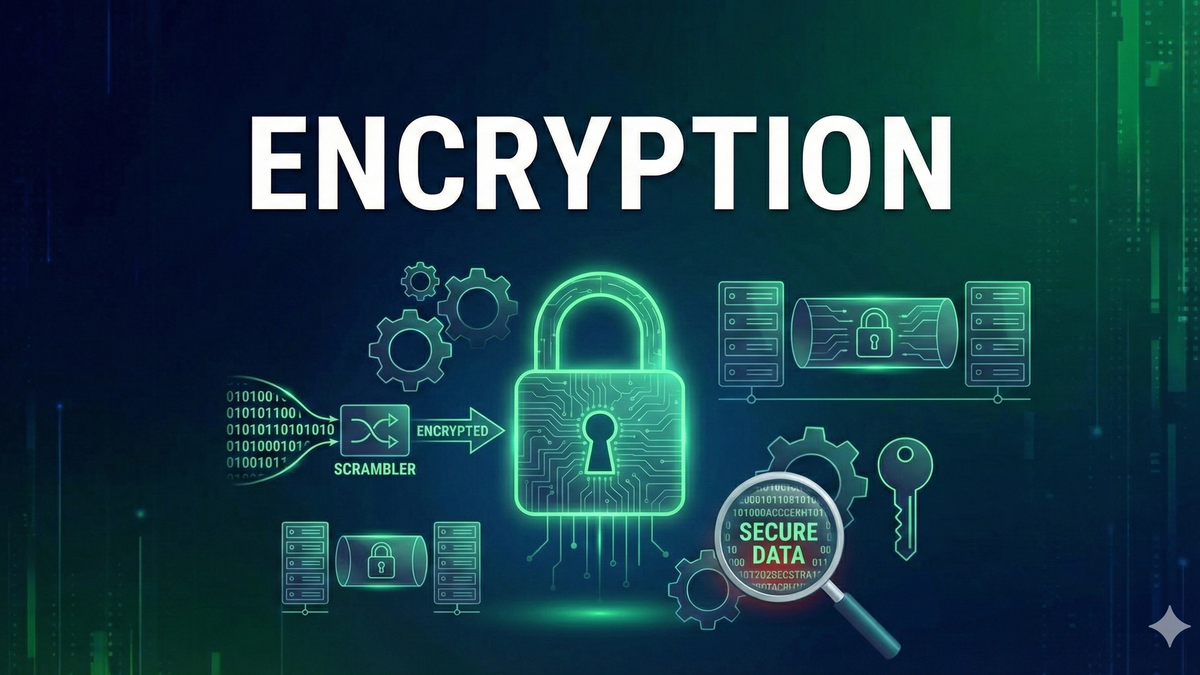
Encryption Explained: A Beginner's Guide
Understand how encryption keeps your data safe, from AES to end-to-end encryption, explained in plain English.
EncryptionEncryption🛡️The process of converting data into a coded format that can only be read with the correct decryption key. is the foundation of digital security. It's what keeps your banking information safe, your messages private, and your data secure. Let's demystify how it actually works.
What is Encryption?
Encryption transforms readable data (plaintext) into scrambled data (ciphertext) that can only be unscrambled with the correct key. Think of it like a lock - anyone can see the locked box, but only someone with the key can open it.
Types of Encryption
Symmetric Encryption
Uses the same key to encrypt and decrypt data. Fast and efficient, but both parties need to have the same secret key. AES (Advanced Encryption Standard) is the most common symmetric algorithm.
Asymmetric Encryption
Uses a pair of keys: a public key (for encryption) and a private key (for decryption). You can share your public key freely - anyone can use it to encrypt messages that only you can decrypt with your private key.
AES: The Gold Standard
AES-256 is used by governments, banks, and security professionals worldwide. The "256" refers to the key length in bits. Breaking AES-256 by brute force would take longer than the age of the universe with current technology.
End-to-End Encryption (E2EE)
With E2EE, only the sender and recipient can read messages. The service provider (like Signal or WhatsApp) can't decrypt them even if they wanted to. Your messages are encrypted on your device and only decrypted on the recipient's device.
Where You Encounter Encryption Daily
Keep Learning
Related Reviews

REOLINK 4K Security Camera System Review: Professional PoE Surveillance at DIY Prices
The REOLINK 4K PoE security system delivers 8MP clarity, smart person/vehicle detection, 24/7 recording with 4TB storage, and plug-and-play installation for comprehensive home surveillance.
Ring Outdoor Cam Pro Review: 4K Security Camera with Radar-Powered Motion Detection
The Ring Outdoor Cam Pro delivers Retinal 4K video, 10x enhanced zoom, Low-Light Sight for true color night vision, and radar-powered 3D motion detection for precise security alerts.
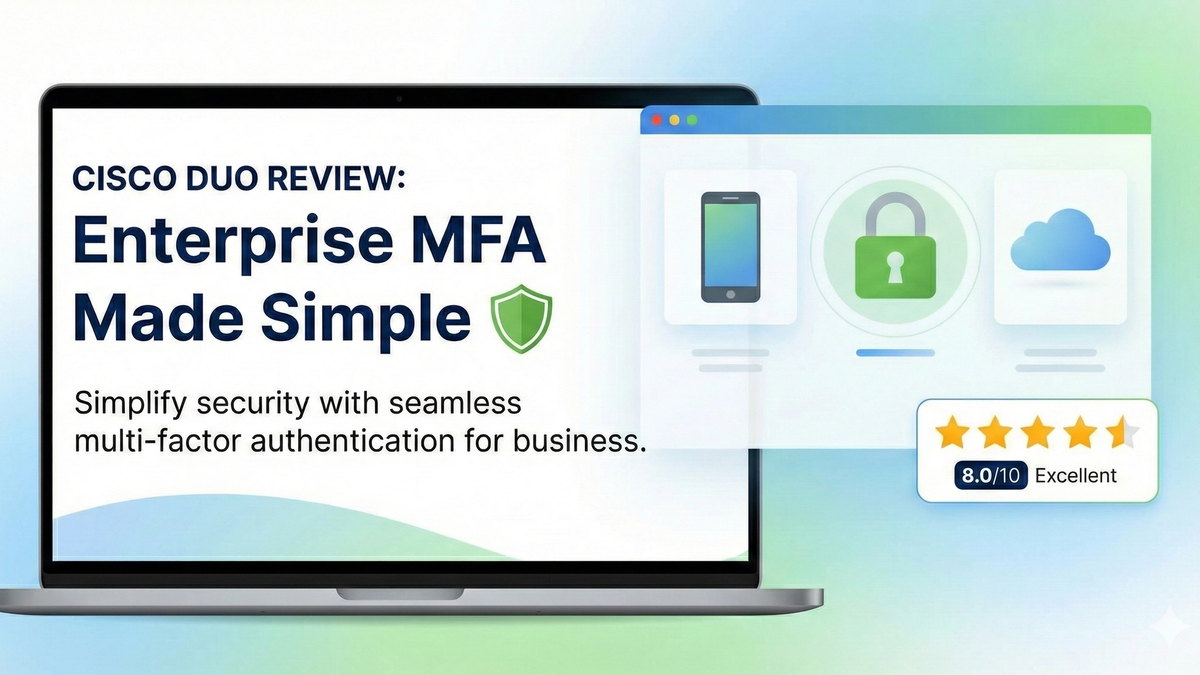
Cisco Duo Review: Enterprise MFA Made Simple
Cisco Duo delivers robust multi-factor authentication with one of the smoothest user experiences in the enterprise MFA space. While pricing can escalate quickly for larger teams, its device trust and adaptive policies make it a solid choice for security-conscious organizations.